Discoid Lupus Erythematosus (DLE)
also known as Lupus, Cutaneous Lupus Erythematosus, Nasal Solar Dermatitis and Collie Nose
|
Discoid Lupus Erythematosus (DLE) is a chronic autoimmune cutaneous (skin) disorder primarily affecting the nose and is often triggered or worsened by solar exposure.
It is most common in Collies (hence the popular term 'Collie Nose') and related breeds such as Australian Shepherds, Border Collies and Shetland Sheepdogs. It is a different condition to Vesicular Cutaneous Lupus Erythematosis (VCLE) which causes skin lesions in the armpits, abdomen and groin, and Systemic Lupus Erythematosus (SLE) which can affect multiple organ systems including joints, kidneys, skin and blood cells. Being an autoimmune condition, it manifests by the immune system attacking the body's own cells, in this case the skin cells, leading to inflammation and skin damage as the surface of the skin begins to slough (shed). The most commonly affected area is the nose however it can also affect eyelids, lips, mouth, ear flaps and rarely the feet or genitalia. It is a relatively rare disease overall but is considered to have a high hereditary component and occurs much more frequently in particular lines. |
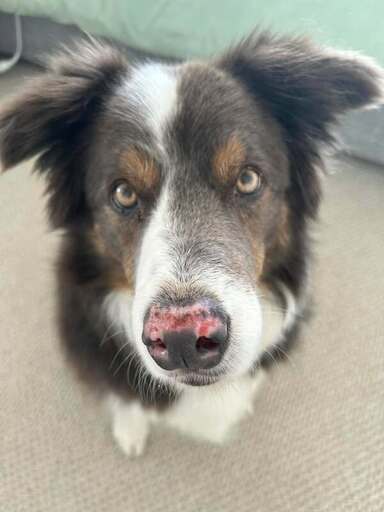
Loss of pigment, erythema (redness), crusting and ulceration - common symptoms of DLE or 'Collie Nose'
|
Unfortunately, as there is no DNA test yet available to identify the genetic markers and avoid the condition, management within breeding programs is limited to discontinuing a line after the condition has presented - making it important for buyers to inform their breeders at all times when lupus is diagnosed. There is also a likelihood that the condition is underdiagnosed as many owners don't recognise symptoms and/or apply topical treatments or sunscreen to 'sunburnt' noses rather than investigate and obtain an official diagnosis and treatment.
The symptoms of DLE can include one or more of the following:
- Loss of pigment or discolouration on the nose leather/nasal planum (bridge of the nose)
- Change in texture and shape of nose from normal 'pebbly' texture to smooth, shiny surface
- Erosion changing the structural shape of the nose
- Skin redness (erythema)
- Skin scaling, flaking or crusting, including along the areas of the face where the skin meets the hair such as lips and eyelids
- Skin ulcerations or blistering
- Hair loss/alopecia
- Scarring
- Pain at affected areas
- Itching and/or scratching may or may not be present
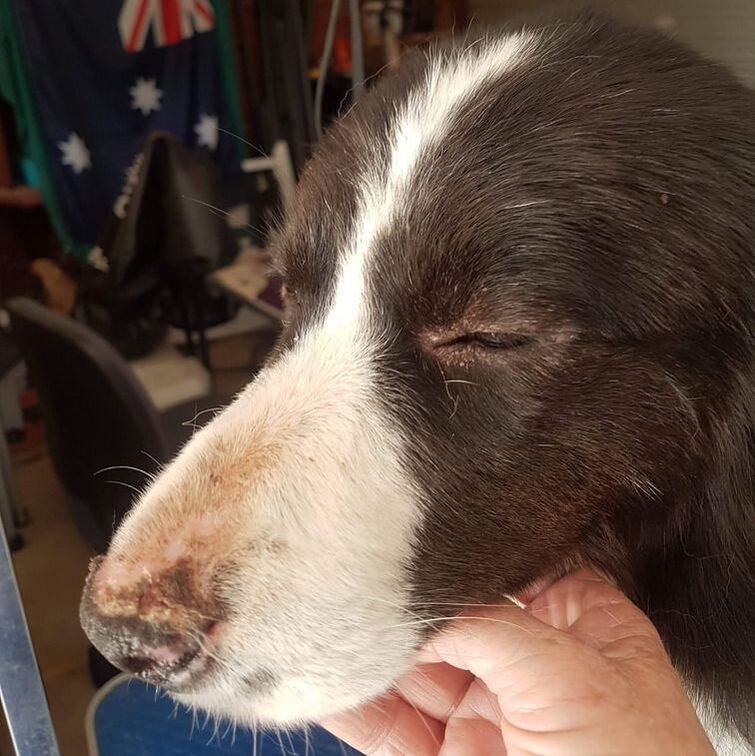
Crusting on the nose, nasal planum and around the eyelids showing how the symptoms are particularly apparent where the hair meets the hairless areas of the face. Pigment loss noticeable.
|
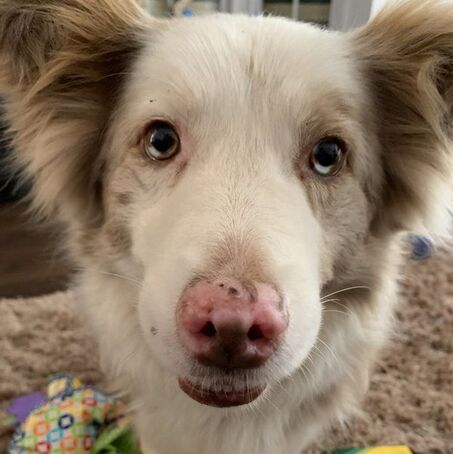
Symptoms showing loss of pigment on nose, scaling close to the hairline, a smoother, shinier skin texture and starting to show signs of erosion around nostrils changing the overall shape of the nose.
|
DLE is a treatable condition and whilst incurable requiring lifelong treatment can be managed relatively easily throughout the dog's life once a plan and consistent monitoring is in place. If untreated however, it can cause the dog a great deal of pain, heavy bleeding if lesions develop near a major blood vessel, and the dog is at much higher risk of squamous cell carcinomas. It can also develop into SLE (although uncommon) which is much more difficult to treat and may not respond to treatment.
As with the majority of autoimmune diseases, it is considered almost certain that a genetic predisposition exists, however there is no genetic testing available and breeders are often only able to avoid conditions once they have presented within lines, sometimes years down the track making it difficult to always identify the source with minimal information or reporting. Autoimmune diseases often also lay dormant within lines until 'triggered' in a dog by other factors such as underlying medical conditions like chronic skin allergies, cancer, or external factors causing an overactive immune response such as viral infections, ultraviolet light exposure (particularly in Australia) or drug reactions. It can be helpful from a breeding perspective to consider autoimmune diseases in a class together rather than addressing them individually, as frequently multiple autoimmune diseases can occur within the same family, and/or present secondary to an existing autoimmune disease presentation. The presence of any autoimmune disease in a dog or its relatives should be considered a sign that other autoimmune diseases might also occur within that line.
Whilst as previously mentioned DLE is thought to have a strong genetic component, and the underlying cause has not yet been identified, the most widely accepted cause and trigger of DLE is exposure to UV light radiation from the sun. UV light appears to worsen the condition and it is more common in sunny climates (like Australia). It is important to keep dogs with less pigment out of the sun as much as possible, and imperative that dogs diagnosed with DLE are protected from UV during intense sunlight hours. Sunscreen will not provide enough protection.
A diagnosis of DLE requires a biopsy to be performed by your veterinarian - there is no other way to confirm or rule out a diagnosis of this condition, and there are other conditions that can present with the same or similar symptoms. The biopsy will be performed under sedation or general anaesthetic as the nose is highly sensitive, and they may require stitches.
Treatment usually consists of topical and/or oral steroids such as prednisone to get the inflammation under control quickly. There can be undesirable side effects with long-term use of steroids so it is likely that once the skin is healed and the inflammation controlled, the dosages will decrease to the lowest effective maintenance dose in conjunction with other treatments. Other treatment options can include tetracycline/doxycycline antibiotics in combination with niacinamide (a B12 vitamin supplement), the combination of which has been found effective in a large number of dogs. There are also some oral and topical immunomodulators which have been shown to be effective in treating DLE, such as 0.1% tacrolimus ointment. The most important thing to remember in managing DLE (which will continue for the lifetime of the dog) is to avoid strong sunlight.
As with the majority of autoimmune diseases, it is considered almost certain that a genetic predisposition exists, however there is no genetic testing available and breeders are often only able to avoid conditions once they have presented within lines, sometimes years down the track making it difficult to always identify the source with minimal information or reporting. Autoimmune diseases often also lay dormant within lines until 'triggered' in a dog by other factors such as underlying medical conditions like chronic skin allergies, cancer, or external factors causing an overactive immune response such as viral infections, ultraviolet light exposure (particularly in Australia) or drug reactions. It can be helpful from a breeding perspective to consider autoimmune diseases in a class together rather than addressing them individually, as frequently multiple autoimmune diseases can occur within the same family, and/or present secondary to an existing autoimmune disease presentation. The presence of any autoimmune disease in a dog or its relatives should be considered a sign that other autoimmune diseases might also occur within that line.
Whilst as previously mentioned DLE is thought to have a strong genetic component, and the underlying cause has not yet been identified, the most widely accepted cause and trigger of DLE is exposure to UV light radiation from the sun. UV light appears to worsen the condition and it is more common in sunny climates (like Australia). It is important to keep dogs with less pigment out of the sun as much as possible, and imperative that dogs diagnosed with DLE are protected from UV during intense sunlight hours. Sunscreen will not provide enough protection.
A diagnosis of DLE requires a biopsy to be performed by your veterinarian - there is no other way to confirm or rule out a diagnosis of this condition, and there are other conditions that can present with the same or similar symptoms. The biopsy will be performed under sedation or general anaesthetic as the nose is highly sensitive, and they may require stitches.
Treatment usually consists of topical and/or oral steroids such as prednisone to get the inflammation under control quickly. There can be undesirable side effects with long-term use of steroids so it is likely that once the skin is healed and the inflammation controlled, the dosages will decrease to the lowest effective maintenance dose in conjunction with other treatments. Other treatment options can include tetracycline/doxycycline antibiotics in combination with niacinamide (a B12 vitamin supplement), the combination of which has been found effective in a large number of dogs. There are also some oral and topical immunomodulators which have been shown to be effective in treating DLE, such as 0.1% tacrolimus ointment. The most important thing to remember in managing DLE (which will continue for the lifetime of the dog) is to avoid strong sunlight.
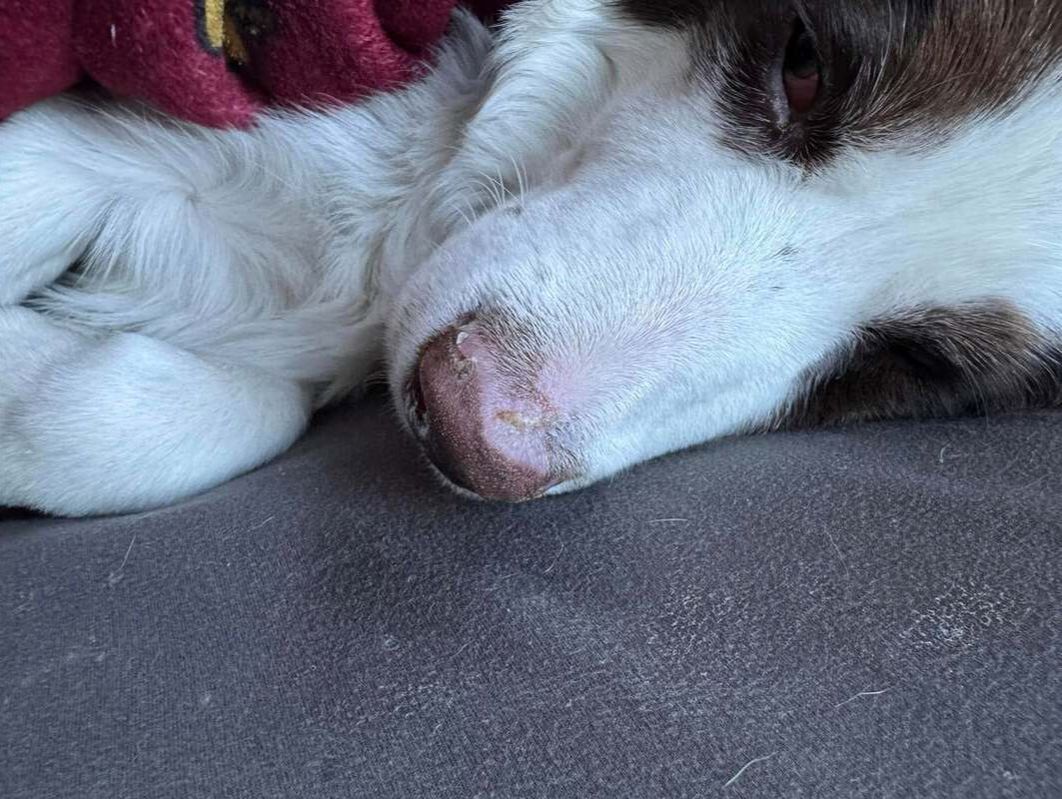
Early DLE symptoms showing pigment loss, blistering and the beginning of flaking along the hairline of the nasal planum.
|
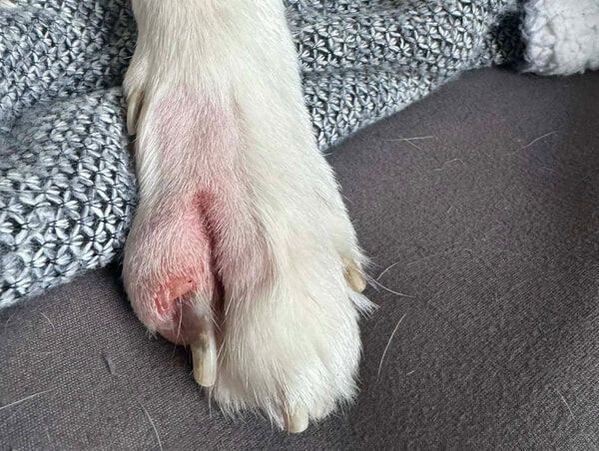
The same dog showing the rarer but known potential impact of DLE on the distal extremities. Affected feet could also be an indication of Pemphigus (see below).
|
There are some other conditions with symptoms that can affect the nose and present similarly to DLE, most notably Pemphigus and Nasal Hyperkeratosis.
Pemphigus is occasionally also called Collie Nose, however it is a separate condition to DLE which is the most common condition referred to by the Collie Nose nickname. Another autoimmune disorder which may present as secondary to other autoimmune diseases, it also features ulcers and crusting of the skin as a result of the body's immune system attacking the connection between its own skin cells, causing the cells to separate and break down.
The most common dermatological autoimmune disease (about one third of all canine autoimmune disorders), Pemphigus Complex is commonly diagnosed in four forms depending on clinical presentation:
The most common dermatological autoimmune disease (about one third of all canine autoimmune disorders), Pemphigus Complex is commonly diagnosed in four forms depending on clinical presentation:
- Foliaceus - commonly diagnosed in dogs and cats particularly from middle to old age and affects the outermost layer of the skin, causing hair loss, scabs and ulcers around the head, face and ears, becoming more widespread over time with the feet usually affected next followed by the groin and abdominal area if left untreated. Breeds predisposed to this form include Chow Chows, Cocker Spaniels, Akitas, Labrador Retrievers, Dachshunds and English Bulldogs.
- Erythematosus - the mildest form similar to Foliaceus but often with less severe symptoms. Predominantly affects the nose, face and ears. More prevalent predisposition amongst breeds such as Collies, German Shepherds and Shetland Sheepdogs. Worsened by exposure to the sun, it has been likened to a crossover between Pemphigus Foliaceus and Discoid Lupus Erythematosus.
- Vulgaris, the most severe form and affects deep skin tissue with the formation of fluid-filled blisters known as vesicles which often rupture and lead to painful ulcerative lesions where mucous membranes meet the skin, often at the edges of the lips and eyes, and other areas such as near the anus and genitals, and occasionally the foot pads and nail beds.
- Vegetans, the rarest form, only found in dogs and also affects deep skin tissue but is not as severe. Lesions appear more as wart-like growths.
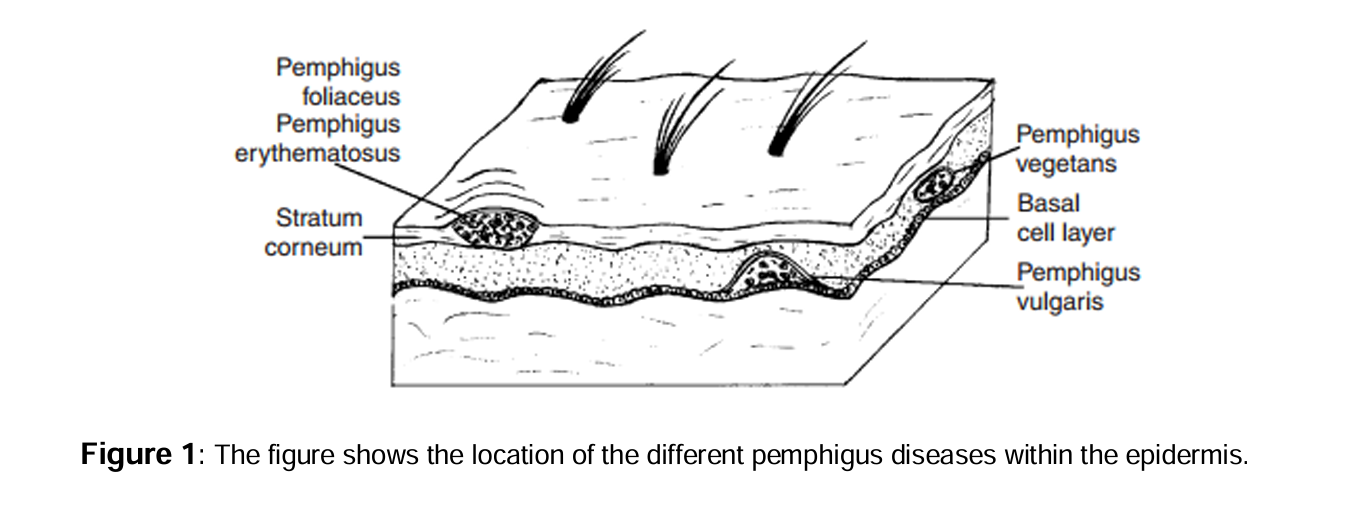
An image from a study of Pemphigus Foliaceus by Marleen Petermann (click image for study)
As with DLE, diagnosis of Pemphigus is only possible through a biopsy. Treatment remains the suppression of the immune system through corticosteroids or other immunosuppressive drugs. Pemphigus Erythematosus tends to be the most responsive to treatment and has a good prognosis, which is good news for Border Collies being the variant most likely to occur in the breed. Pemphigus Foliaceus also has a fairly good prognosis however can be slightly more resistant to treatment so the prognosis whilst usually good depends more on the individual response. It is fortunate that Pemphigus Vulgaris is rare, as it is a serious condition with a poor prognosis and is often fatal due to the widespread effects on the skin.
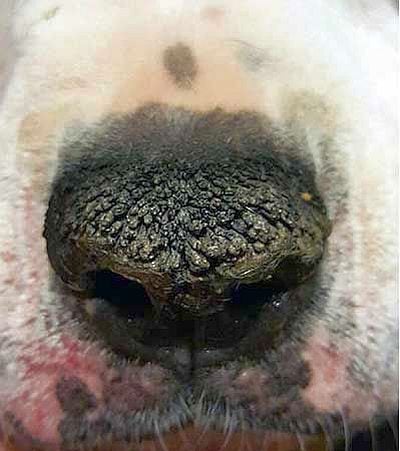
Nasal Hyperkeratosis is not considered an autoimmune disease, however it can be a symptom of underlying autoimmune disorders. It is characterised by thickened skin on the nose caused by an overgrowth of skin cells (keratin) on the surface of the nose. The body produces keratin faster than it can shed, causing a crusty buildup of excess cells. The skin will look dry, rough, thick or even crusty or cracked. This condition can also affect the paw pads (Nasodigital Hyperkeratosis), presenting in the same way with an overgrowth of keratin - however this can also occur with abnormalities in the dog's gait.
More common in middle aged to older dogs, certain breeds are considered more genetically predisposed to Nasal Hyperkeratosis such as brachycephalic breeds (Bulldogs, Pugs, Boxers etc.), Cocker Spaniels, Doberman Pinschers and occasionally Golden Retrievers or Labradors (however this is often due to a different disorder, Nasal Parakeratosis). These hereditary forms usually show up earlier in life, typically before 12 months of age. Some external factors considered a cause of Nasal Hyperkeratosis can include parasites, parasitic (usually Leishmaniasis), bacterial, viral or fungal infections, ringworm, or zinc deficiencies. Zinc is critical for skin cells and when dogs do not absorb enough zinc the skin can't regenerate properly. This is more common in larger breeds. Nasal Hyperkeratosis can also occur following a viral Canine Distemper infection however this is rare due to the common vaccination protocol covering Distemper. In older dogs, it may simply occur as part of aging, as the body's ability to regulate keratin production and wear changes and the excess builds up gradually.
Underlying conditions such as DLE or Pemphigus may initially cause symptoms that can be mistaken for Nasal Hyperkeratosis, and as previously mentioned it may occur in combination with an underlying autoimmune disease so it is always important to investigate and have them ruled out. Hereditary forms in young dogs of known predisposed breeds can usually be diagnosed based on clinical signs and breed history, however for other cases a biopsy will provide the definitive answer. Biopsies will also identify autoimmune diseases if present, or simple keratin overproduction. Treatment of Nasal Hyperkeratosis is usually a case of topical management to keep your dog's skin hydrated and moisturised, and potentially regular soaking and trimming of the excess keratin to prevent buildup from cracking and becoming a source of infection. This condition is not usually particularly uncomfortable or painful unless left untreated and the buildup becomes too large, or the skin cracks or becomes infected.
More common in middle aged to older dogs, certain breeds are considered more genetically predisposed to Nasal Hyperkeratosis such as brachycephalic breeds (Bulldogs, Pugs, Boxers etc.), Cocker Spaniels, Doberman Pinschers and occasionally Golden Retrievers or Labradors (however this is often due to a different disorder, Nasal Parakeratosis). These hereditary forms usually show up earlier in life, typically before 12 months of age. Some external factors considered a cause of Nasal Hyperkeratosis can include parasites, parasitic (usually Leishmaniasis), bacterial, viral or fungal infections, ringworm, or zinc deficiencies. Zinc is critical for skin cells and when dogs do not absorb enough zinc the skin can't regenerate properly. This is more common in larger breeds. Nasal Hyperkeratosis can also occur following a viral Canine Distemper infection however this is rare due to the common vaccination protocol covering Distemper. In older dogs, it may simply occur as part of aging, as the body's ability to regulate keratin production and wear changes and the excess builds up gradually.
Underlying conditions such as DLE or Pemphigus may initially cause symptoms that can be mistaken for Nasal Hyperkeratosis, and as previously mentioned it may occur in combination with an underlying autoimmune disease so it is always important to investigate and have them ruled out. Hereditary forms in young dogs of known predisposed breeds can usually be diagnosed based on clinical signs and breed history, however for other cases a biopsy will provide the definitive answer. Biopsies will also identify autoimmune diseases if present, or simple keratin overproduction. Treatment of Nasal Hyperkeratosis is usually a case of topical management to keep your dog's skin hydrated and moisturised, and potentially regular soaking and trimming of the excess keratin to prevent buildup from cracking and becoming a source of infection. This condition is not usually particularly uncomfortable or painful unless left untreated and the buildup becomes too large, or the skin cracks or becomes infected.